🔗 Paper on which the article is based
written by Mohammed Bilal Ahmed and Nicolas Perez
✏️ Introduction
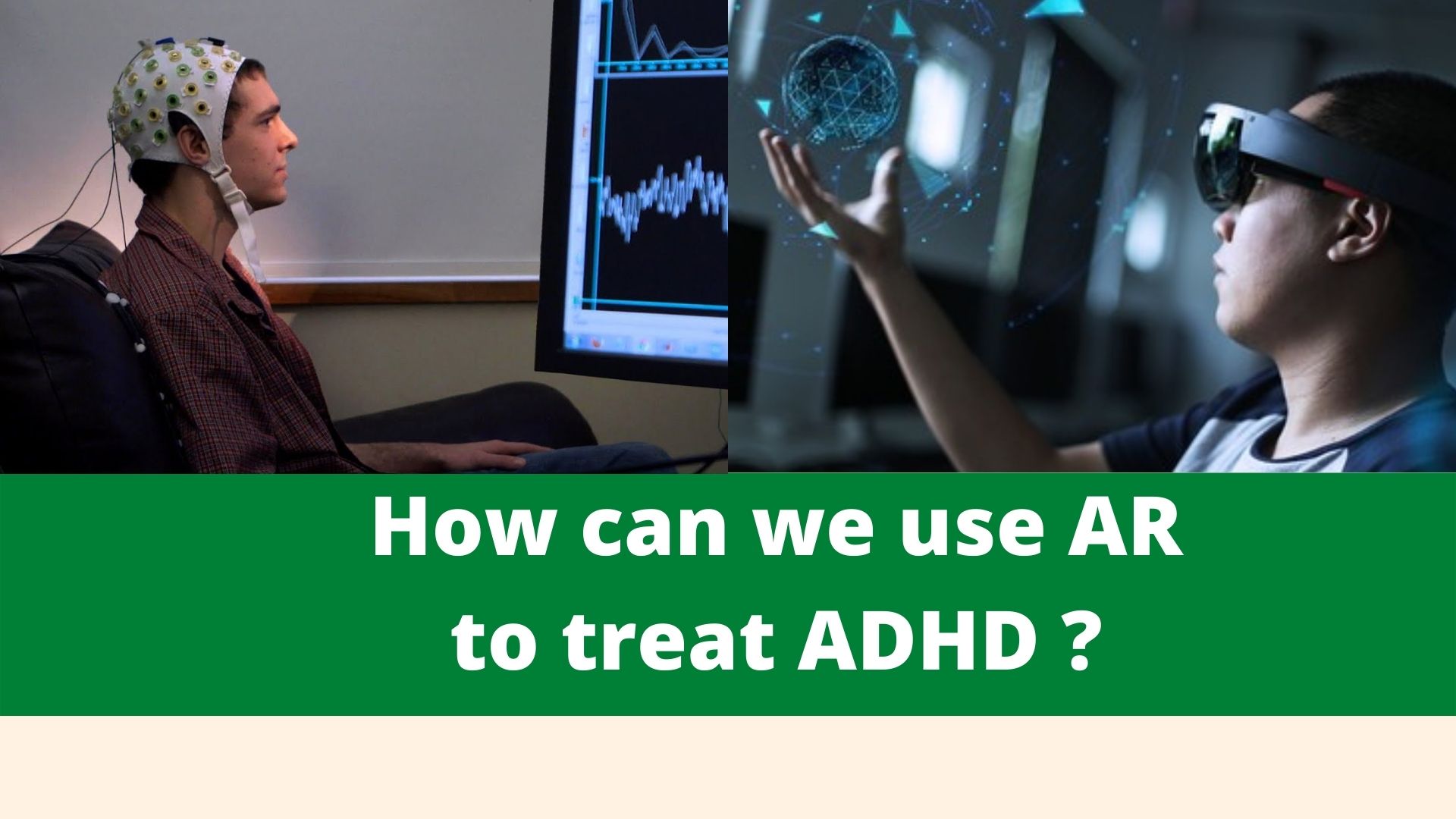
Human Computer interaction can be a lot more than just making convenient systems that make tasks and work easier. This is shown by the paper we’ll be analyzing: A Brain-Computer Interface and Augmented Reality Neurofeedback to Treat ADHD: A Virtual Telekinesis Approach. The authors of the paper use previous research to describe and justify a new form of Neurofeedback Therapy for kids with ADHD. This new form of NFT uses AR technology as opposed to two dimensional interfaces from the past.
What did the authors assess and find?
The new gamified therapy the authors present functions by using a device to measure the type of brainwave the user’s brain produces. By prior research on the authors’ part, they note that people with ADHD produce more “Theta” brain waves and less “Beta” brain waves than neurotypical people. The aim of this new interface, as with previous methods of Neurofeedback Therapy, is to increase the number of “Beta” brainwaves the user produces. The authors note that in the past this form of therapy has issues with users committing to it due to the number of sessions it requires, and the lack of engaging feedback. This new interface was created to solve that issue with its AR interface. In particular, this interface uses a balloon inflating and a spoon bending in correlation to the user’s focus.
Limitations of the paper
As this is an “idea” paper, there isn’t much data the authors collected themselves. The data they collected was used in order to help them correctly use the data collected by the headset the users have to wear. Authors accounted for differences between individuals by using an algorithm that adjusts to the individual, this does require a baseline examination however. That baseline examination also accounts for differences created by the user moving their head or blinking. From feedback, they assessed that the more realistic the models and animations they had the better the interface was. The paper is not an experimental paper rather it is more of a white paper. It does an excellent job at introducing AR and VR in relation to neurofeedback. However one of the biggest drawbacks of the paper was the fact that it did not follow through with field experiments for many of the ideas that were presented. Thus, one could not verify the effectiveness of the ideas that were presented.
The contributions of the paper to the scientific community
The paper not only explored a new field of research but also provided enough evidence for other researchers to potentially further the study. The paper’s biggest contribution was the fact that it explored most if not all the possibilities for using AR and VR for Neurofeedback. The analysis of the feasibility and success rate of each AR and VR method mentioned are a subject of a study in itself. That is what the paper aimed at presenting i.e. it did not aim at evaluating each method’s practical success rate rather it aimed at presenting all the available options. All in all this paper is only a first step in the field of Neurofeedback and AR/VR technology. There are many more steps needed before one can implement this in a real clinical case.